Windows Designed for Everyday Ventilation
Casement and Awning Windows in Leduc
Find a practical opening style. Get a Free Estimate
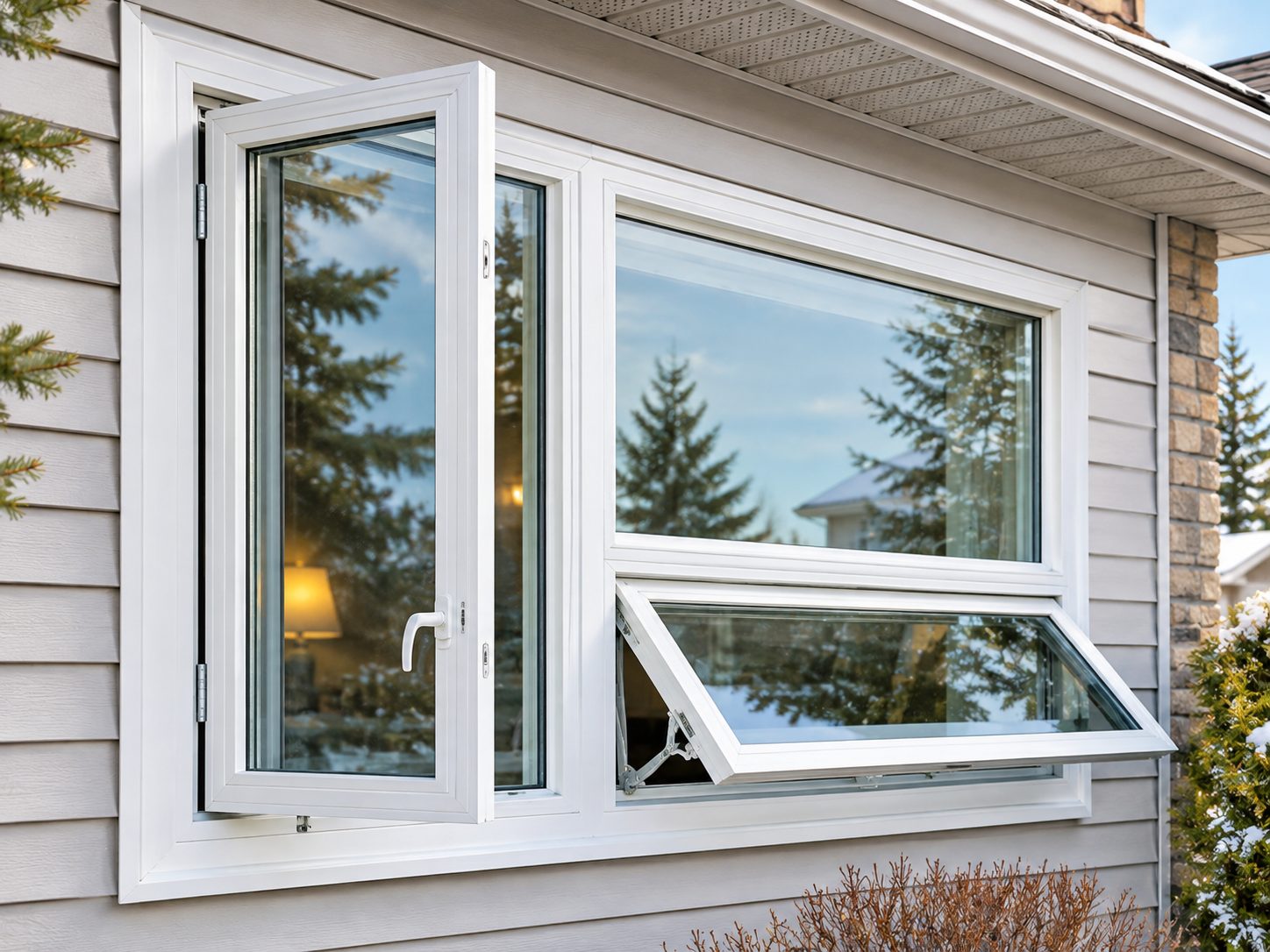
Casement and awning windows offer two practical approaches to residential ventilation. Both commonly use hinged sashes that project outward, although the hinge positions and opening characteristics differ.
These windows can work well in kitchens, bedrooms, bathrooms and other spaces where accessible operating hardware and controlled airflow are important. The surrounding layout helps determine which configuration makes the most sense.
If existing windows have become difficult to operate or you want a different opening style, we can connect your request with a contractor to assess the available options.
Consider how each window will be used, what surrounds the opening and whether particular ventilation or safety requirements apply to the room.
Casement windows open outward from hinges positioned along one vertical side of the sash. Depending on their design, they may provide a substantial ventilation opening and can be arranged to catch passing breezes. The direction of opening matters when there are nearby obstacles, adjacent windows or exterior pathways. The contractor can help establish which hinge orientation works with the property's layout. Accessible operating and locking hardware should also be considered, especially where the window is installed above furniture or a kitchen counter.
An awning window projects outward from its lower edge while remaining hinged across the top. This arrangement can allow ventilation during light rain in suitable conditions, although it does not make the opening weatherproof while the window remains open. Awning styles can suit bathrooms, kitchens and shorter horizontal openings. They may also be combined with fixed glazing to provide fresh air without making the entire assembly operable. Exterior clearance and access for cleaning should be checked when deciding where to use them.
Many hinged window systems close against perimeter weather seals. Proper alignment and consistent contact between the sash and frame help limit unwanted air movement when the window is closed. Operating hardware needs to function correctly for the assembly to achieve its intended closure. An older window that no longer pulls tightly against the seals may require adjustment or component replacement rather than immediate complete removal. The contractor can evaluate whether repair remains practical for the existing design.
A large window opening can contain fixed glazing together with smaller casement or awning sections. This arrangement lets homeowners balance views, natural light and ventilation without requiring a single oversized moving sash. Consider how the dividing frame members affect the appearance of the opening and whether the operating controls remain accessible. The contractor can explain suitable configurations based on opening dimensions and the available product designs.
Hinges, handles, operators and locking mechanisms need to remain accessible and functional throughout normal use. Dirt around moving components or excessive force on a sticking sash can contribute to operating problems. Ask about appropriate cleaning methods and any product-specific maintenance instructions when selecting replacement windows. Screens should also be easy to remove where the design allows it. Thinking about everyday operation before ordering helps ensure the completed window fits the way the household uses the room.
Discuss opening configurations based on furniture, counters and everyday household activity.
The contractor can consider pathways, landscaping and other obstacles before selecting an outward-opening design.
Review how the proposed windows open, close and lock before finalizing the replacement.
Explore window configurations that make ventilation and everyday operation easier in the rooms you use most.
Free — no obligations
Describe what is inconvenient about your existing windows and how you would like them to open.
The contractor checks the opening and considers interior accessibility and exterior obstructions.
Discuss hinge direction, glazing characteristics, screen arrangements and operating hardware.
Review the agreed replacement scope and check window operation after the contractor completes the work.
Yes, depending on the opening dimensions and accessibility of the operating handle. The design should allow comfortable operation without excessive reaching.
An awning sash may provide some shelter during light rain. Wind-driven rain can still enter, so close the window when conditions could allow water indoors.
A new casement can often be ordered with an appropriate hinge orientation. The choice should account for nearby openings, exterior clearance and room layout.
The operator, handle connection or related hardware may be damaged. An inspection can determine whether a compatible replacement component is available.